Create Your First Project
Start adding your projects to your portfolio. Click on "Manage Projects" to get started


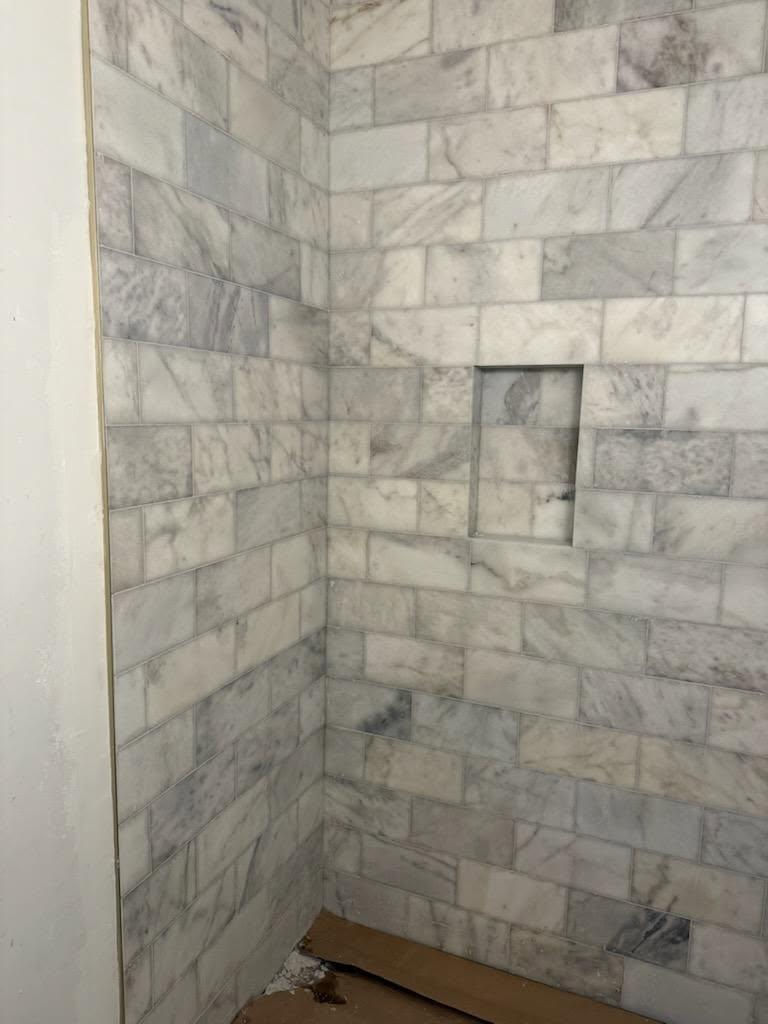
Marble Shower
Project type
Marble Tile
Date
Dec.11,2024
Location
Wilmington, Nc
This was a high-end project that combines structural prep, waterproofing, and precise stonework. Unlike standard tile, marble requires extra care because it’s heavier, porous, and more sensitive to moisture and staining.
The process usually begins with demolition and preparation. Any existing shower materials—tile, drywall, or fixtures—are removed down to the wall studs and subfloor. The framing is inspected and reinforced if needed to support the weight of the marble. At this stage, plumbing is also adjusted or upgraded to match the new shower layout, including the valve, showerhead, and drain position.
Next comes the foundation and waterproofing, which is one of the most critical steps. A shower pan or sloped mortar bed is created to ensure proper drainage toward the drain. Then a waterproofing system—such as a membrane or liquid-applied barrier—is installed on the floor and walls. This layer prevents water from penetrating behind the marble, which is essential for long-term durability and preventing mold or structural damage.
Once the area is fully prepped and waterproofed, the marble installation begins. Large marble slabs or tiles are carefully measured, cut, and dry-fitted to ensure clean lines and proper alignment. A specialized thin-set mortar is applied, and each piece is set in place with attention to spacing and leveling. Because marble often has natural veining, installers take extra time to match patterns for a cohesive look.
After the marble is installed, grout is applied between the joints. Many installers use a non-sanded or fine grout to avoid scratching the stone. Once the grout cures, the marble is sealed with a penetrating sealer to protect it from moisture and staining—this is especially important since marble is more porous than ceramic or porcelain.
The final steps include installing fixtures (such as the showerhead, controls, and trim), sealing all edges and corners with silicone caulk, and polishing the marble surfaces if needed. The shower is then cleaned and inspected before use.
Overall, installing a marble shower is a labor-intensive process that requires precision and proper waterproofing techniques. When done correctly, it creates a durable, elegant space, but it also requires ongoing maintenance, including periodic resealing, to keep the marble looking its best.